
Transforming Homes with Dust-Free Wood Floor Sanding
Nestled on the south bank of the Thames, SE16 – encompassing Bermondsey, Rotherhithe, Surrey Docks and parts of Canada Water – boasts an eclectic mix of Georgian cottages, Victorian warehouses and sleek riverside apartments. Hardwood, softwood and parquet floors run through these homes like a living timeline of the area’s maritime heritage. When those boards begin to look tired, many residents worry that sanding them back will coat every surface in a fine, choking powder. Happily, there is a modern solution: Dust-Free Wood Floor Sanding, a technology-driven approach that restores shine while keeping the air brilliantly clear.

1. Understanding the Character of SE16 Floors
1.1 A neighbourhood of contrasts
From narrow 18th-century terraced homes near Bermondsey Street to the lofty live-work lofts that pepper the riverside, SE16’s housing stock is remarkably diverse. Your living room might feature pitch-pine planks, 1920s maple strip, 1960s finger-block or newly laid engineered oak – each demanding a slightly different sanding approach.
1.2 Common floor issues in riverside properties
- Moisture ingress: Proximity to the river raises ambient humidity, encouraging cupping and crowning.
- Historic coatings: Layers of bitumen or shellac can obscure the timber’s natural grain.
- Board movement: Older pine floors often suffer from shrinkage, leaving draughty gaps.
A dust-controlled sanding system is invaluable here, allowing the technician to work slowly and precisely without stopping to sweep up clouds of debris.
2. The Downside of Traditional Sanding
Conventional drum or belt sanders rely on cloth bags to catch waste; they trap only around 60 % of particulate matter. The remainder drifts:
- Into skirting-board crevices, where it spawns grey lines.
- Onto paintwork, demanding a complete re-decor.
- Inside electronics, shortening their lifespan.
- Into the lungs of anyone present, aggravating asthma and allergies.
Home-owners once paid extra for “deep-clean” packages after sanding. Today, most prefer to avoid the mess entirely.
3. How Modern Dust Extraction Works
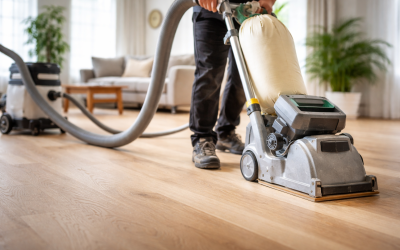
At the heart of professional Dust-Free Wood Floor Sanding is a three-part technology stack:
- Sealed sanding units – skirted edges and balanced drums shave millimetres from the timber while limiting particle escape.
- All-metal ducting – antistatic hoses whisk debris away instantly, preventing clogs and sparking.
- High-capacity vacuums (H-class) – HEPA-filtered extractors create negative pressure, drawing 99.97 % of particles down to 0.3 μm.
Because extraction happens at source, technicians can see their progress clearly and finish to a finer grit, achieving a glass-smooth surface that absorbs sealers evenly.

4. Step-by-Step Process for Flawless Results
4.1 Initial survey and moisture testing
Before a single abrasive touches the boards, a reputable contractor checks sub-floor humidity, board thickness and nail depth – essential in Thames-damp SE16.
4.2 Coarse sanding – levelling the canvas
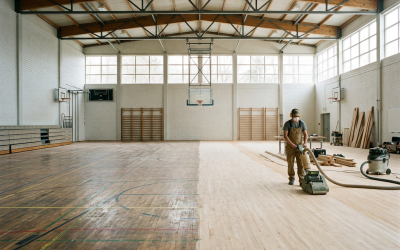
The first pass removes high spots and old coatings with a 24- or 36-grit belt. Thanks to Dust-Free Wood Floor Sanding, visibility is perfect, so technicians avoid digging trenches or leaving swirl marks.
4.3 Gap filling and repairs
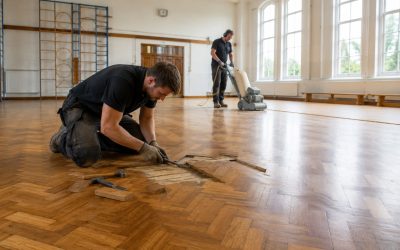
Reclaimed pine slivers, resin mixed with micro-dust or new tongue-and-groove boards close draughts. A dust-controlled environment ensures fillers cure without contamination.
4.4 Medium and fine sanding
Progressive grits (60-, 80-, 100- and finally 120-grit) flatten scratches until the floor feels silky. Edge sanders and corner pads link seamlessly with the main field.
4.5 Buffering, vacuuming and tack-clothing
A rotary buffer fitted with a 150-grit screen crosses the grain, blending drum lines. Ultra-fine extraction removes residual powder so that sealers bond directly to timber, not dust.
4.6 Finishing
Oils, lacquers or hardwax-oil are applied in thin coats. The absence of airborne debris eliminates nibs, delivering a factory-grade sheen.

5. Health, Safety & Environmental Benefits
Choosing Dust-Free Wood Floor Sanding protects décor and wellbeing:
- Cleaner air: HEPA filtration captures microscopic allergens.
- Lower VOC exposure: With less dust, fewer solvent-heavy cleaners are needed afterwards.
- Energy efficiency: Gap-sealing during sanding cuts heat loss – valuable in converted warehouses with high ceilings.
- Reduced waste: Precision sanding removes only what is necessary, extending the life of heritage boards.
Local schools and healthcare clinics in SE16 increasingly mandate extraction systems that meet H-class standards, setting an example for private homes.
6. DIY vs Professional Expertise
Hire-shops rent “dustless” sanders, yet these often rely on standard vacuums, capturing roughly 80 % of debris. A trained crew using genuine Dust-Free Wood Floor Sanding rigs will:
- Finish an average 25 m² room in a single day rather than a weekend.
- Sand flush to skirting without gouging.
- Provide commercial-grade lacquers that cure in hours, not days.
- Offer insurance, warranties and after-care support.
Unless you’re adept with heavy machinery and happy to repaint dusty walls, outsourcing is usually cheaper in real terms.

7. Preparing Your SE16 Property
- Declutter thoroughly: Extraction is superb, but vibration can topple ornaments.
- Isolate pets: Even low-odour finishes can irritate sensitive noses.
- Check parking: Many streets near Southwark Park require permits; extraction vacs and drums weigh up to 100 kg.
- Alert neighbours: Courtesy counts, especially in converted warehouses.
8. Caring for Your Newly Restored Floor
A surface treated with Dust-Free Wood Floor Sanding will gleam, but maintenance sustains that glow:
- Use a pH-neutral cleaner weekly; avoid steam mops.
- Place felt pads under furniture and breathable rugs in high-traffic areas.
- Top-up treatments: Hardwax-oiled boards benefit from a revitalising coat every 18–24 months; lacquered floors may need a light screen and re-coat after five years.
- Maintain stable humidity: Aim for 40–60 % RH.

9. Frequently Asked Questions
Will extraction hoses damage skirting boards?
No – hoses are flexible and corners are taped.
Can engineered oak be sanded?
Yes, if the wear layer exceeds 3 mm.
How long before I can walk on the floor?
Often two hours after the final lacquer; rugs after a week.
Is the system suitable for listed buildings?
Absolutely. It protects mouldings and minimises dust-sheeting.
Does it cost more than standard sanding?
Day-rates are similar because crews spend less time cleaning.
10. Budgeting and Typical Costs in SE16
| Work Scope | Average Rate (per m²) | Notes |
|---|---|---|
| Coarse & fine sanding only | £18–£22 | For sound boards needing cosmetic refresh |
| Full restoration with repairs | £25–£32 | Includes gap filling, board replacement & staining |
| Premium natural oil finish | +£4 | Enhances grain, needs periodic top-ups |
| Commercial two-part lacquer | +£6 | High-traffic protection for cafés & galleries |
Investment in low-dust methods reduces ancillary costs such as redecorating and air-purifier hire.
11. Finish Compatibility
Low-dust machinery leaves a pristine surface that accepts a broad range of coatings:
- Water-based lacquers: Fast-drying, minimal smell.
- Solvent-based lacquers: Richer tone but higher VOCs.
- Hardwax oils: Breathable layer, ideal for older pine.
- Penetrating oils with UV hardeners: Cure under lamps for same-day turnaround.
Because the timber is virtually debris-free, even matt lacquers remain clear without cloudy swirls.

12. Case Study: Victorian Terrace on Galleywall Road
When Emma and Tom bought their 1890s two-up two-down, the dining room floor hid beneath a threadbare carpet. Inspection showed:
- 25 mm pitch-pine boards darkened by kauri varnish.
- Rusted cut nails protruding 2 mm.
- A paraffin-spill stain near the hearth.
Restoration journey
- Nail punching and metal detection.
- Patch repairs with reclaimed boards.
- Dust-contained levelling with 36-grit belts – just 0.7 mm removed.
- Resin-and-dust gap filling.
- Fine sanding to 120 grit and 150-grit screen.
- Low-VOC satin lacquer (35-gloss).
Results
The couple returned that evening to a gleaming, dust-free room. Total spend: £880 for 24 m² – less than replacing with engineered flooring.
13. Sustainability & Local Supply Chains
Opting for extraction-based restoration supports London’s 2030 Net-Zero plan:
- Lower material wastage: Minimal timber removed.
- Reduced transport emissions: SE16 firms often use electric vans and UK-made finishes.
- Enhanced indoor air quality: No micro-particulates lingering in the air.
Many contractors donate recovered sawdust to community gardens for composting or to riding schools as bedding.
14. Project Timeline & Client Checklist
| Stage | Duration | Client Action |
|---|---|---|
| Site visit & quotation | 1 hour | Provide access to all rooms |
| Booking confirmation | — | Pay deposit, confirm finish |
| Restoration day | 1 day per 25 m² | Remove small items; contractor moves large pieces |
| Curing & ventilation | 24 hours | Keep windows ajar, 18–22 °C |
| First clean & rug placement | 7 days | Soft-bristle vacuum only |
Stick this table to the fridge and tick off each stage for a stress-free experience.

15. Expert Tips for Long-Term Brilliance
- Rotate rugs every six months to avoid light patches.
- Renew felt pads annually; crushed pads scratch.
- Trial cleaners on an off-cut before widespread use.
- Schedule a professional inspection every five years; a quick re-coat now prevents deep sanding later.
- Log humidity with a £15 digital hygrometer so you can spot seasonal trends early.
Seasonal stewardship, coupled with precision restoration, will keep your boards turning heads well into the next century.
Conclusion:
SE16’s rich architectural tapestry deserves gentle, precise care. Whether you live in a river-view apartment on Odessa Street or a dockers’ cottage on Clements Road, Dust-Free Wood Floor Sanding offers a path to gleaming boards without the mess. By understanding the technology, preparing your space and investing in professional craftsmanship, you’ll preserve your property’s character and enhance daily comfort – all while breathing easier.