Hardwax Oil or Polyurethane for Bermondsey Floors: Which One Lasts Longer?
If you live in Bermondsey, your floor has to cope with more than ordinary family traffic. Converted warehouses, exposed brick interiors, open-plan kitchen-living spaces, dogs, bikes, dinner parties, rolling office chairs and heavy dining tables all create a tougher wear pattern than a quiet spare room. That is why choosing the right finish matters just as much as the sanding itself. At Floor Sanding Bermondsey, we help homeowners choose finishes based on how they actually live, not just on what looks good on day one.
For many Bermondsey homes, the real debate is not whether to refinish the timber, but whether to choose hardwax oil or polyurethane. Both can protect a professionally sanded floor, but they behave very differently once real life starts happening. In warehouse-style apartments around SE16, where wide boards, natural light, industrial décor and high daily use are common, the wrong finish can leave you with visible wear lanes, difficult patch repairs or a look that feels too plastic for the character of the space.
In simple terms, hardwax oil is usually the better fit when you want a natural look, easy localised maintenance and a finish that ages with character. Polyurethane is often the better choice when maximum surface durability and lower routine maintenance are the priority. The right answer depends on your timber species, subfloor stability, expected traffic, sheen preference and how willing you are to maintain the finish over time.
Why Bermondsey Floors Need a More Careful Finish Choice
Bermondsey properties are rarely standard. Many homes in the area combine original timber character with modern urban living. That can mean old pine boards in a Victorian terrace, engineered oak in a warehouse conversion, or a mixed restoration project where reclaimed boards meet newer replacements. These floors often sit beneath oversized furniture, island units, metal-framed seating and constant footfall between kitchen, hallway and living space.
That lifestyle changes the finishing conversation. A finish that looks beautiful in a showroom may not perform the same way under chair legs, pet claws and regular hosting. Equally, a very hard commercial-style coating may offer excellent protection but can flatten the warmth and texture that owners of Bermondsey lofts usually want to preserve.
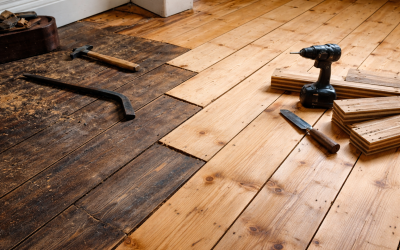
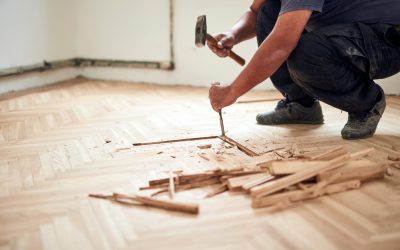
The job, then, is to match the finish to the way the floor will actually be used. That includes checking moisture content before sanding, assessing the wear layer on engineered boards, examining board gaps and movement, and planning the correct sanding sequence. On older boards, we often need to account for previous coatings, historic staining, subfloor irregularities and edge softness before the finish decision is even made.
What Is Hardwax Oil?
Hardwax oil is a finishing system that combines oils and waxes to protect timber while preserving a close-to-natural look and feel. Instead of creating a thick surface film, it penetrates into the wood fibres and leaves a breathable, low-sheen finish that tends to highlight grain and texture beautifully.
This makes it especially popular in design-conscious Bermondsey interiors where clients want their boards to look like timber, not like they have been sealed beneath a shiny coating. On wide oak planks, parquet panels or restored pine boards, hardwax oil often gives a warmer, more architectural result than polyurethane.
One of its biggest practical advantages is repairability. If a section gets scratched or worn near a kitchen island, entrance route or dining area, hardwax oil can often be cleaned, abraded and re-oiled locally without re-sanding the entire room. In lived-in warehouse apartments, that can be a major long-term benefit.
What Is Polyurethane?
Polyurethane is a film-forming finish that sits on top of the timber and creates a protective barrier against wear, spills and abrasion. In residential wood floor work, this usually means either a water-based polyurethane or another modern lacquer-type system designed for timber floors.
For busy homes, this finish is appealing because it generally provides strong resistance to scuffs, chemical exposure and repeated foot traffic. It is commonly chosen where clients want easier day-to-day cleaning and less frequent maintenance intervention.
Polyurethane also gives you predictable sheen options, from ultra-matt through to satin or higher sheen depending on the system used. In some interiors that is ideal. In others, especially where clients are chasing a softer reclaimed-wood look, it can feel slightly more sealed or artificial than hardwax oil.
How the Two Finishes Actually Differ in Real Homes
1. Appearance
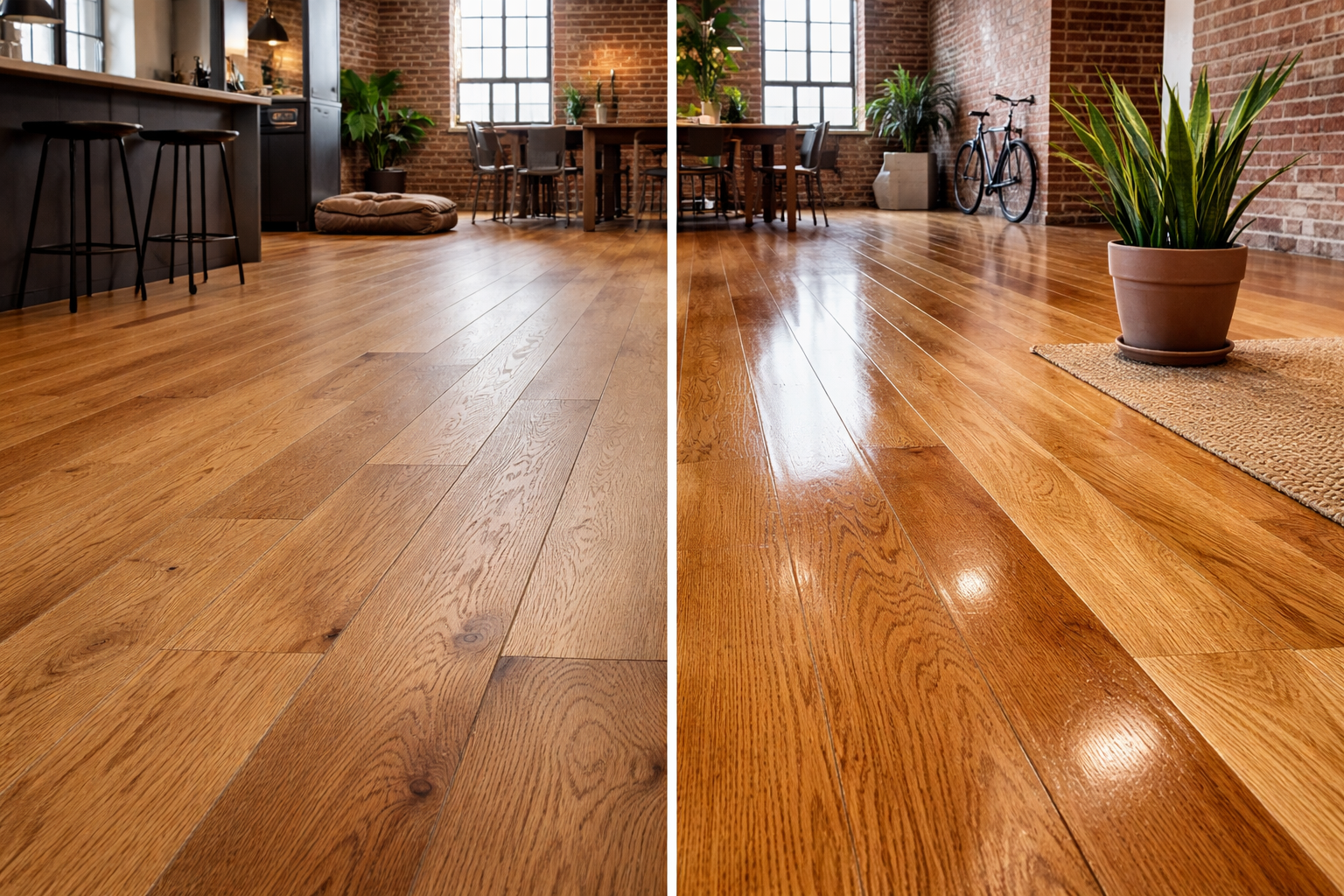
Hardwax oil usually wins on natural appearance. It enriches the grain, preserves texture and gives timber a more organic, understated finish. This suits Bermondsey warehouse aesthetics particularly well, especially where there are exposed brick walls, steel-framed glazing, neutral palettes and a preference for matte finishes.
Polyurethane tends to look more uniform because it forms a surface coat. Modern ultra-matt systems are far better than older glossy lacquers, but the feel is still generally more sealed than an oiled floor.
2. Surface Protection
Polyurethane usually has the advantage for outright resistance to heavy wear, scuffing and chemical exposure. In households with dogs, frequent entertaining or heavy furniture movement, that tougher top-layer protection can make sense.
Hardwax oil is durable, but it wears differently. Rather than failing as a film, it tends to gradually dull in the heaviest traffic paths. Some homeowners prefer this because it ages more gracefully. Others see it as a maintenance commitment.
3. Repairability
This is where hardwax oil often pulls ahead. A damaged patch can often be treated locally, making it practical for homes where wear concentrates in very specific areas. Polyurethane is harder to patch invisibly. Once the surface film is compromised, local repairs can flash or show lap marks, meaning a larger recoat is often the cleaner professional solution.
4. Maintenance Style
Polyurethane is usually easier for owners who want a simpler cleaning routine and less regular intervention. Hardwax oil can look superb for years, but it benefits from more informed maintenance and occasional refresher treatment in high-use zones.
5. Feel Underfoot
Hardwax oil tends to feel more tactile and timber-like. Polyurethane feels smoother and more sealed. This sounds minor, but in premium residential spaces it often matters a great deal to the final satisfaction of the owner.
Which One Handles the Bermondsey Warehouse Lifestyle Better?
The honest answer is that both can work, but they suit different priorities.
Choose hardwax oil if your priorities are:
- a natural, low-sheen, design-led appearance;
- easy localised repairs in walkways and around furniture;
- timber character over a fully sealed look;
- a finish that develops patina rather than staying visually uniform;
- better harmony with reclaimed, aged or brushed boards.
Choose polyurethane if your priorities are:
- stronger surface resistance in a very busy household;
- less ongoing maintenance involvement;
- protection against frequent scuffing, spills and chair movement;
- a more consistent appearance across the whole room;
- a practical finish for families who want durability first.
In Bermondsey warehouse conversions, hardwax oil is often the better aesthetic match. In family homes with constant traffic and minimal maintenance appetite, polyurethane often wins on practicality. For some clients, we also discuss specific high-performance systems depending on how “natural” or “bulletproof” they want the floor to be.
How Timber Type Changes the Decision
The finish cannot be chosen in isolation from the floor itself. Oak, pine, parquet, engineered boards and reclaimed softwood all respond differently to sanding and sealing.
Victorian Pine and Reclaimed Boards
Older softwood boards often have movement, historical filling, repaired sections and visible character marks. Hardwax oil can be an excellent match because it complements the floor’s age and allows future spot repairs. In a Bermondsey character property, that can preserve authenticity far better than a heavy film finish.
Oak Boards and Parquet
Oak works well with either system. If you want grain depth and a premium matte look, hardwax oil is often preferred. If you want a tougher, easier-cleaning family finish, polyurethane is frequently the more practical choice.
Engineered Wood Floors
These require careful assessment of the wear layer before any sanding begins. Once refinishing is viable, the finish decision should reflect both traffic and the manufacturer’s limitations. On higher-quality engineered oak, either system can work well when the prep is handled correctly.
Why Preparation Decides Whether Either Finish Succeeds
Many floor finish failures are blamed on the product when the real issue is preparation. A premium finish cannot compensate for poor sanding, contaminated boards or unstable moisture conditions.
For professional results, the process should include:
- moisture-content mapping before sanding and finishing;
- inspection of loose boards, squeaks and subfloor stability;
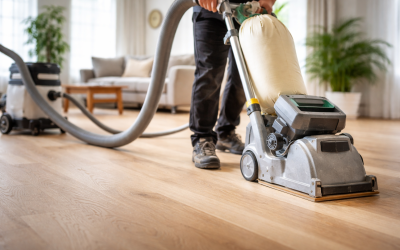
- the correct sanding sequence, often moving through a controlled grit progression such as 36–40 grit, then 60, 80 and finishing at 100 or 120 depending on species and finish type;
- proper edge work and corner detail sanding;
- dust-controlled extraction throughout;
- careful cleaning before primer, oil or topcoat application;
- respect for drying and curing windows under actual site conditions.
In Bermondsey properties, where temperature swings, open-plan layouts and older structures can all affect timber movement, these details matter enormously. A finish only performs as well as the surface beneath it.
What About Scratches, Pets, Chairs and Entertaining?
This is where most homeowners make the final decision.
If your floor will see dog traffic, regular dinner parties, stools dragged under an island and daily movement between kitchen and living space, polyurethane usually offers stronger short-to-medium-term protection from visible wear. It is often the safer choice for people who do not want to think about maintenance very often.
If, however, you know that wear will happen and you prefer a finish that can be refreshed in sections rather than living with a visibly damaged film, hardwax oil becomes extremely attractive. Many design-led homeowners are happy to accept a slightly more involved maintenance model in exchange for a floor that looks more natural and can be renewed without full-room disruption.
Maintenance Differences Over 1, 3 and 5 Years
Hardwax Oil
In the first year, routine dry cleaning and careful mopping with the right products usually keep the surface looking excellent. In high-traffic zones, some floors benefit from a maintenance oil or refresher product before visible wear becomes severe. Over three to five years, the biggest advantage is that isolated areas can often be revived without a full resand.
Polyurethane
In the first years, the routine is usually simpler: regular cleaning, good entrance matting and felt protection under furniture. Once wear eventually cuts through the film in traffic lanes, the repair process is often less forgiving than with oil. Depending on the severity and visibility, a buff-and-recoat or broader intervention may be needed rather than a tiny local patch.
Best Choice by Lifestyle Type
Choose Hardwax Oil for:
- Bermondsey warehouse apartments with a premium industrial aesthetic;
- owners who love natural grain and matte character;
- restored older boards and reclaimed timber;
- households comfortable with periodic maintenance care;
- clients who want the option of localised repairs.
Choose Polyurethane for:
- busy family homes with intense everyday traffic;
- owners prioritising durability over patina;
- homes with pets, children and rolling furniture;
- clients wanting a lower-maintenance routine;
- projects where maximum surface protection is the priority.
Our Professional Recommendation for Bermondsey Homes
If the brief is “make it look natural, premium and easy to patch when real life happens”, hardwax oil is often the strongest answer. If the brief is “give me the toughest practical surface for a very busy home”, polyurethane is often the better call.
For many Bermondsey clients, the tipping point is visual character. Warehouse homes often look best when the timber still feels like timber. That is why hardwax oil remains such a popular option in converted industrial spaces. But where durability, children, pets and constant use dominate the decision, polyurethane remains a very sensible and often superior choice.
The right outcome comes from matching the finish to the property, the timber and the lifestyle rather than following a one-size-fits-all rule.
Final Word
Hardwax oil and polyurethane are both valid professional finishes, but they solve different problems. In a Bermondsey warehouse-style home, the best finish is the one that fits the building’s character and the owner’s real maintenance habits. If you want depth, warmth and easy local repairs, hardwax oil is hard to beat. If you want stronger surface resistance and a simpler upkeep routine, polyurethane is usually the safer bet.
Need help deciding? Contact Floor Sanding Bermondsey for a floor-specific recommendation based on your timber type, wear pattern and finish goals.