
Dust-Free Floor Sanding in Southwark: A Cleaner Way to Restore Wood Floors
In busy Southwark homes, restoring timber floors should not mean filling the property with fine dust, stale odours and lingering mess. At Bermondsey Floor Sanding, we use modern dust-free sanding systems to make wood floor restoration cleaner, more controlled and far better suited to family life in SE1, SE15, SE16 and the wider Southwark area. Whether we are working in a Victorian terrace, an Edwardian conversion, a riverside apartment or a warehouse-style flat, our aim is the same: remove worn finishes and surface damage while keeping airborne dust to an absolute minimum and protecting indoor air quality throughout the project.
For homeowners, landlords and designers, that matters more than ever. A floor sanding project should reveal beautiful timber beneath tired coatings, not leave fine particles drifting onto shelves, soft furnishings and radiators for days afterwards. Our process combines professional containment, staged sanding, careful preparation, moisture-awareness, premium finishing systems and disciplined cleaning so your home feels healthier, calmer and easier to live in from the start.
Why Indoor Air Quality Matters During Floor Sanding
Traditional sanding had a poor reputation for a reason. Older machines often threw fine dust into the room, where it settled on skirting boards, light fittings, upholstery and worktops. Some particles remained airborne long enough to irritate the nose, throat and eyes, especially in sealed homes with limited cross-ventilation. In Southwark, where many properties already deal with traffic pollution, compact room layouts and heat-retaining modern glazing, homeowners understandably want restoration work that does not add unnecessary indoor contamination.
That is why dust control is not just a convenience feature for us. It is a core part of how we plan and carry out wood floor sanding. Reducing airborne dust helps create a cleaner working environment, lowers disruption to the household and makes the whole restoration process more suitable for homes with children, pets, allergy-sensitive occupants and people working remotely. It also supports better results because the sanding team can actually see the timber clearly between passes instead of working through a haze of loose debris.
If you are comparing approaches, our wood floor sanding in Bermondsey guide explains how modern dust-controlled restoration differs from older, messier methods and why that matters in real homes.
What “Dust-Free Sanding” Really Means
Dust-free sanding does not mean that no particle is created at any stage. Sanding timber will always generate dust because abrasives are removing old finish, ingrained dirt and a fine layer of wood fibre. What changes is how that dust is controlled. We use professional sanding machinery connected to high-filtration extraction so the majority of dust is captured at source instead of being released into the room.
In practical terms, that means:
- dust is extracted as the machine works rather than after the fact
- settling dust on furniture and decorative surfaces is drastically reduced
- edges, corners and main field areas are managed as part of one controlled system
- clean-up times are shorter and more effective
- the home remains more comfortable during and after the work
On our own site, dust-free sanding is presented as a key part of the service because modern extraction materially reduces mess and disruption during restoration. That cleaner approach is especially valuable in Southwark properties where floor sanding often happens in occupied homes rather than empty renovation shells.
How We Prepare Southwark Homes Before Sanding Starts
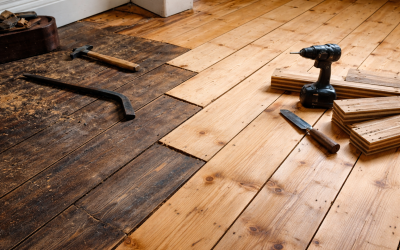
Good indoor air quality starts before the first machine is switched on. Preparation is where many poor jobs go wrong. We do not simply arrive and begin sanding immediately. We first assess the timber type, previous coatings, floor stability, visible damage and the way the property is being used while the work is underway.
1. Room-by-room assessment
We inspect whether the floor is original pine, hardwood strip, parquet, engineered oak or mixed timber from previous patch repairs. Southwark homes often have varied substrates and layouts, particularly in converted properties where one room may contain old softwood boards and another may have later parquet or engineered material.
2. Moisture-content awareness
Where needed, we check for signs of moisture imbalance before restoration. This is particularly important in lower-ground floors, Victorian terraces with historic damp issues, and flats near kitchens, entrance zones or leaking balcony thresholds. Moisture-content mapping helps us identify whether dark staining, cupping, block lift or finish failure is cosmetic or linked to an underlying problem that needs addressing first.
3. Surface preparation
We remove or secure protruding fixings, punch down nails, stabilise loose boards and deal with movement before sanding. A stable floor is essential for cleaner sanding because loose timber sheds debris unpredictably and prevents a consistent abrasive pass.
4. Targeted room protection
We isolate the immediate work area as far as practical, discuss furniture movement, protect adjacent zones and reduce unnecessary traffic through the sanding space. This containment mindset is one of the biggest differences between professional restoration and improvised DIY jobs.
Our Dust-Controlled Sanding Process, Step by Step
Coarse cut: controlled removal, not aggressive guesswork
The first stage is designed to remove old lacquer, wax, hardwax oil residues, paint traces or deep wear. On many Southwark timber floors, especially original softwood, that means starting with a grit sequence suited to the condition of the surface rather than blindly taking off too much material. On worn period boards, that may involve a disciplined 36-grit opening cut before progressing upward. On flatter or more delicate surfaces, we adapt the sequence accordingly to avoid unnecessary loss of usable timber.
Intermediate refinement
Once the old coating and upper damage layer have been removed, we move through intermediate abrasives to level the surface, reduce scratch patterns and prepare the wood for finer work. At this stage, extraction remains crucial because fine dust increases as the abrasive sequence progresses.
Fine finishing passes
For a professional finish, we work through to finer grades, commonly taking the floor through a 36–120 grit progression where appropriate for the timber and finish specification. The objective is not merely to make the wood look pale and fresh. It is to create a clean, consistent, finish-ready surface that will accept oil or lacquer evenly and without contamination.
Edge and detail work
Skirting lines, corners, thresholds and radiator zones are handled with dedicated edge equipment and careful extraction control. Poor edge sanding is one of the easiest ways to spread dust around a room and one of the quickest ways to ruin the look of an otherwise well-sanded floor. We treat perimeter work as part of the same quality-control system as the main field.
Intercoat and pre-finish cleaning
Before any seal or finish is applied, we vacuum and detail-clean the surface carefully. Fine dust left on the boards can compromise both indoor cleanliness and finish adhesion. This stage is one reason professional results look smoother, clearer and more durable over time.
Why This Works So Well in Southwark Homes
Southwark contains a very mixed housing stock, and dust-free sanding is especially useful because each property type presents its own air-quality challenges.
Victorian and Edwardian houses
Older homes often have original pine boards with historic gaps, old bitumen traces, previous filler lines and years of trapped household dust between boards. A cleaner sanding process reduces the risk of turning that hidden debris into a fresh indoor-air problem during restoration.
Warehouse conversions and loft apartments
Open-plan layouts can allow dust to travel further if extraction is poor. Dust-controlled sanding helps keep contamination closer to the source and makes these architecturally open spaces much easier to manage.
Modern flats with limited ventilation
Newer apartments often have tighter building envelopes. That can be excellent for energy efficiency but less forgiving when messy renovation methods are used indoors. Our controlled approach is better suited to occupied flats where air movement is restricted.
Family homes with pets and children
Homes with young children, pets or regular home working need restoration methods that are cleaner, faster to reset and less stressful to live around. Dust-reduced sanding helps us keep the project practical rather than chaotic.
Cleaner Sanding Also Helps the Finish Perform Better
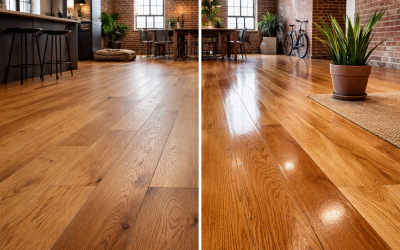
There is another advantage that homeowners often overlook: cleaner sanding usually supports a better final finish. When fine dust is allowed to drift and resettle on the timber, it can interfere with the clarity and consistency of the protective system applied afterwards. Cleaner preparation gives oils and lacquers a more stable surface to bond to.
Depending on the room, traffic level and visual goal, we may recommend:
- high-performance lacquer systems for busy family areas and commercial-style wear
- hardwax oil for clients wanting a natural, tactile appearance with repair-friendly maintenance
- specialist stain work where a colour shift is needed before sealing
Our prices page shows the site’s service structure for lacquer, hardwax oil, oil and additional coating options, which is useful when planning the scope of a Southwark restoration project. For clients who want to understand the design value of retaining original timber rather than replacing it, our parquet floor restoration article is also a helpful reference point.
Indoor Air Quality Is About More Than Dust Alone
Responsible floor restoration is not only about extraction during sanding. Indoor air quality is also affected by the products used after sanding, how the room is ventilated, and whether the finish is suited to the space. That is why we think about the whole restoration chain rather than treating dust control as a marketing phrase.
Product choice
We select finishing systems based on performance, appearance, maintenance expectations and suitability for the room. In many Southwark homes, low-sheen contemporary finishes are preferred because they give a cleaner, more natural look and are easier to live with visually than high gloss.
Application discipline
Over-application, poor drying conditions and rushed recoating can all create avoidable odour or performance issues. Proper film build, correct drying windows and controlled site conditions matter just as much as the sanding itself.
Ventilation planning
Every property behaves differently. Some need managed airflow through sash windows and internal doors. Others need a more conservative approach to avoid drawing in excess outdoor moisture or construction dust from adjacent works. Practical judgement matters.
Common Southwark Floor Problems We Solve During Dust-Free Sanding
- Dull traffic lanes: common in entrance halls, living spaces and kitchen walkways
- Black edge staining: often linked to moisture, plant pots, leaks or old cleaning habits
- Gaps and draught lines: especially in older pine boards
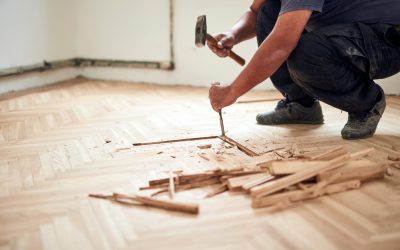
- Loose parquet blocks: frequent in period flats and communal areas
- Old orange varnish tones: where the client wants a more current natural or matte finish
- Patch repairs: where previous work used poorly matched timber or filler
- Uneven sheen: where older spot repairs left the floor looking blotchy
In each case, the cleaner the sanding environment, the easier it is to inspect the timber accurately and produce a finish-ready surface that looks deliberate rather than patched together.
Why Professional Dust-Free Sanding Beats DIY Hire Machines
Many homeowners are tempted by weekend hire machines, especially when trying to save money before decorating. The problem is that domestic hire sanding often creates more mess, more airborne dust and more avoidable damage than expected. In Southwark homes, where space is often limited and neighbouring rooms remain in use, that can become a false economy very quickly.
DIY sanding commonly goes wrong in five ways:
- poor extraction and widespread dust contamination
- uneven passes that create chatter, waves or stop-start marks
- incorrect grit progression that leaves deep scratches under the finish
- over-sanding of edges, parquet patterns or engineered wear layers
- wrong product choice for traffic level and maintenance needs
If the property is a shop, studio, office or hospitality venue rather than a home, our commercial floor sanding guide explains how controlled dust management becomes even more important where cleanliness, downtime and presentation all matter at once.
Our Best-Practice Approach to Healthier Floor Restoration
For homeowners in Southwark, our approach is built around a simple principle: a beautiful floor should not come at the cost of a dirtier home environment. That is why we focus on a full process rather than one promise. We assess first, repair properly, sand in a controlled sequence, extract dust at source, clean carefully between stages, and use high-quality finishing systems that suit the timber and the way the room is used.
We also give practical guidance on drying times, furniture return, aftercare and long-term maintenance, because the life of the finish depends on what happens after the sanding team leaves. Entrance matting, felt pads, careful cleaning products and realistic maintenance intervals all help preserve both the appearance of the floor and the cleanliness of the indoor environment.
Book Dust-Free Floor Sanding for Your Southwark Property
If your boards, parquet or hardwood floors are scratched, dull, stained or simply dragging down the room, professional restoration can make an immediate difference. With modern dust-free sanding, the process is far cleaner and more suitable for real homes than many people expect.
At Bermondsey Floor Sanding, we help homeowners across Southwark restore original timber floors with less mess, better finish quality and a stronger focus on indoor comfort. To discuss your floor, view likely costs on our prices page or contact us directly through our contact page for a tailored quotation.