
When Should You Repair or Replace Old Victorian Floorboards?
Victorian floorboards are one of the most valuable original features in many Bermondsey homes. Long pine boards, aged grain, honest wear and the patina that only time can produce give these floors a warmth that modern materials rarely match. In many cases, boards that look battered, draughty or badly stained can still be restored successfully. At Bermondsey Floor Sanding, we regularly inspect period timber floors and advise homeowners whether professional repair, sanding and refinishing will deliver a durable result or whether targeted replacement is the better investment.
That distinction matters. Replacing too much original timber can strip character from a Victorian property. Equally, trying to save boards that are structurally unsound can waste money and leave you with a floor that still moves, squeaks, gaps or fails prematurely. The right decision depends on more than surface appearance. It comes down to subfloor stability, moisture history, board thickness, previous repairs, timber condition and how the room will be used in everyday life.
In this guide, we explain how experienced floor restoration specialists assess old floorboards, when repair is the sensible route, when replacement is unavoidable, and why the answer is often a combination of both rather than an all-or-nothing decision. We will also cover common Bermondsey property issues, including draughty suspended floors, past leaks, paint contamination, insect damage and failed patch repairs in Victorian terraces and warehouse-style conversions.
Why Victorian Floorboards Are Usually Worth Saving
Many homeowners assume old boards must be replaced simply because they look rough. In reality, visible wear is often cosmetic rather than structural. Deep surface scratches, darkened finishes, paint splashes, carpet-gripper scars, old nail holes and patchy staining may look severe before sanding, yet the timber underneath can still be sound. A properly restored Victorian floor often outperforms cheaper modern softwood because the original boards have had decades to stabilise and harden.
In period Bermondsey homes, original floorboards also contribute to the architectural identity of the property. Once they are removed, matching the width, grain character and age of the timber becomes harder. That is why good restoration starts with conservation-minded judgement. The goal is not to make every board look factory-new. The goal is to preserve as much original material as possible while making the floor safe, attractive and serviceable for modern living.
We often see floors that owners feared were beyond recovery, only for sanding, localised board repairs, secure refixing and a carefully chosen finish to transform the room. If the boards still have adequate wear layer, stable fixing points and no major structural failure, restoration is usually the more characterful and cost-effective route.
What We Check Before Recommending Repair or Replacement
A serious assessment goes far beyond looking at surface scratches. Before any recommendation is made, the floor needs to be inspected in stages. We look at timber species, board width, movement underfoot, previous coatings, evidence of moisture, cupping, insect attack, gaps, damaged tongues, unsupported ends and the condition of the joists or subfloor beneath. Moisture-content mapping is especially important where there have been leaks, condensation issues or ground-floor damp concerns.
We also assess how much timber remains above the tongue. Victorian boards that have already been sanded several times may be too thin for another aggressive pass. In those cases, careful screening or partial replacement may be safer than full sanding. Likewise, if previous repairs introduced mismatched boards, filler-heavy patches or unstable sections, the visible problem may only be part of a larger structural issue.
At the same time, not every imperfection is a defect. Small gaps, slight undulation and age-related movement are typical in old timber floors. The question is whether those features fall within normal period-floor behaviour or whether they now compromise stability, appearance or finish performance.
Signs a Victorian Floorboard Can Usually Be Repaired
Repair is normally the right choice when the board is fundamentally sound but has localised issues. Common examples include surface wear, minor splits, old screw holes, shallow burn marks, isolated edge damage, slight looseness at a fixing point or small cut-outs left from historic plumbing or electrical work. Boards with these problems can often be secured, pieced in, filled appropriately and blended during sanding and finishing.
Here are the clearest signs that repair is still viable:
- The board feels firm underfoot and is still properly supported.
- The timber is dry, with no ongoing damp problem.
- Damage is local rather than running through most of the board length.
- The board retains enough thickness for sanding and long-term use.
- Splits are stable and can be repaired without compromising strength.
- Historic nail or screw damage is cosmetic rather than structural.
- The surrounding boards are in compatible condition.
In these cases, targeted repair preserves more original timber and keeps the floor visually authentic. It is also usually easier to achieve a cohesive finish when the majority of the original boards remain in place.
When Replacement Becomes the Smarter Option
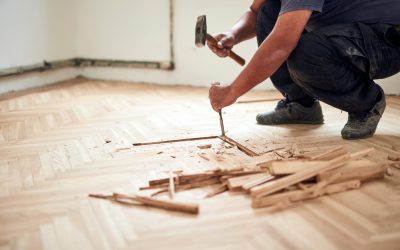
Replacement is justified when the timber has lost structural integrity or when repair would be little more than disguise. A board is often beyond saving when rot has softened the fibres, insect damage has hollowed out the core, repeated saturation has caused severe distortion, or so much of the board has been cut away that it no longer performs as flooring. Likewise, boards with major fractures running along the grain, extensive crumble around fixings or serious underside decay usually need to come out.
Another common issue in Victorian properties is over-sanding. If the board is too thin above the tongue, another full sanding cycle can weaken it, expose fixings or shorten its life dramatically. In that situation, selective replacement of the worst boards before refinishing the rest is often the safest route.
We would normally recommend replacement where you see one or more of the following:
- Soft, rotten timber caused by chronic damp or leaks.
- Active or historic woodworm damage severe enough to undermine strength.
- Large missing sections, broken ends or unsupported joins.
- Severe cupping, crowning or twist that cannot be corrected safely.
- Multiple failed repairs that have left the board unstable.
- Excessively thin boards after repeated sanding over many years.
- Extensive black staining tied to deep water ingress and fibre breakdown.
When replacement is necessary, the best outcome usually comes from reclaim-matched boards rather than generic new pine. This helps maintain the visual rhythm, density and age character of the original floor.
The Most Common Bermondsey Problems in Victorian Floors
Bermondsey properties often present a particular mix of conditions. Ground floors in older terraces can suffer from historic damp, poor subfloor ventilation or long periods under impermeable coverings such as vinyl, lino or bitumen-backed materials. Upper floors may show movement around chimney breasts, altered partitions or old plumbing routes. In warehouse conversions and adapted period buildings, old boards are sometimes mixed with later replacements of different width or timber grade.
We also frequently find:
- Wide seasonal gaps due to heating changes and dry winter air.
- Blackened boards near old radiators, sinks or balcony thresholds.
- Paint contamination from previous decorative schemes.
- Loose boards caused by worn fixings and joist shrinkage.
- Crude patch repairs using MDF, plywood or unmatched softwood.
- Uneven surfaces where sections were replaced at different heights.
These problems do not automatically mean wholesale replacement. In fact, many floors respond well to a mixed restoration plan: lift and inspect the worst section, replace only the unsalvageable boards, refix the loose ones, then sand the entire area as a whole for a uniform finish.
Repair vs. Replace: A Practical Decision Table
| Condition | Usually Repair | Usually Replace |
|---|---|---|
| Surface scratches and finish wear | Yes | No |
| Minor localised split | Yes | No |
| Loose board with sound timber | Yes | No |
| Small historic cut-out or patch area | Yes | Sometimes |
| Deep rot or softness | No | Yes |
| Severe woodworm weakening the board | No | Yes |
| Board too thin after repeated sanding | Sometimes | Often |
| Major distortion from water damage | Rarely | Usually |
Why a Mixed Approach Often Gives the Best Result
One of the biggest mistakes homeowners make is assuming the decision must be either total restoration or total replacement. In reality, the best Victorian floor projects often involve preserving 80 to 95 per cent of the original boards and replacing only the genuinely failed sections. This approach protects the period feel of the property while removing the parts most likely to cause future problems.
That is especially relevant in high-use Bermondsey homes where people want the charm of original timber but also need a floor that can cope with family life, pets, furniture movement and daily foot traffic. Selective board replacement, accurate levelling, gap treatment where appropriate and a durable finishing system can provide the right balance between authenticity and practicality.
For related restoration work on patterned timber, see our parquet floor restoration in Bermondsey guide. If you are comparing general sanding and refinishing options, our article on wood floor sanding in Bermondsey explains the wider process. Commercial owners can also explore commercial floor sanding in Bermondsey if period timber is part of a shop, studio or office setting.
How Professional Repairs Are Carried Out Properly
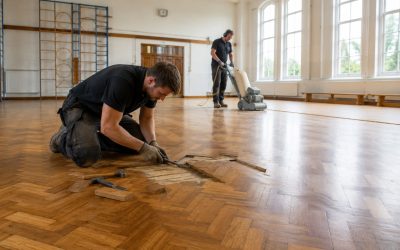
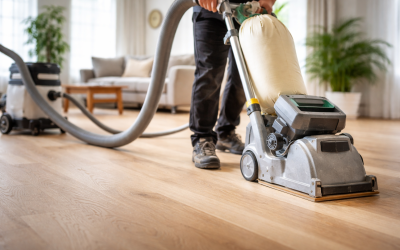
Quality repair work is not about hiding problems with filler. It starts with stabilising the structure. Loose boards are lifted or refixed correctly, subfloor issues are addressed, and damaged sections are cut back cleanly. Where replacement pieces are needed, reclaimed pine is often the closest match for Victorian boards in both grain and age character. The repaired area is then blended into the floor during sanding.
We also choose gap-filling methods carefully. Fine movement gaps may suit a resin-and-sawdust fill, but wider gaps in older pine floors often benefit more from sliver repairs because they retain better structural integrity and look more natural over time. That matters in period homes, where the wrong filler can crack, sink or stand out after seasonal movement.
On the Bermondsey pricing page, resin gap filling is listed from £8 per m² for small gaps up to 3 mm, while reclaimed pine slivers are listed from £14 per m² for wider gaps, and reclaimed pine floorboard replacement is listed from £30 per linear metre. Those figures help explain why accurate diagnosis matters: the right method depends on the size and behaviour of the gap, not just appearance.
Choosing the Right Finish After Repair or Replacement
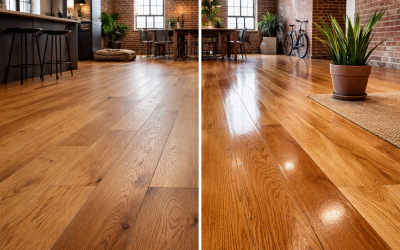
Once the floor is structurally sound, the finish determines how it will look and perform. In Victorian homes, many owners want a finish that respects the timber’s age rather than making it look plasticky or over-coated. Matte and satin systems are generally the most successful visually, especially in Bermondsey interiors with exposed brick, period joinery or warehouse-style design elements.
A hard-wearing lacquer is often chosen where durability and lower maintenance are priorities, particularly in busy family rooms and hallways. Products in the Bona Traffic HD line are marketed for high wear resistance and demanding environments. For clients who prefer a more natural, breathable look, hardwax-oil systems such as Osmo Polyx-Oil are widely used on timber floors and are promoted as durable and abrasion-resistant for interior wood surfaces. For general care guidance after restoration, the NWFA’s maintenance advice is also a useful external reference point. Read Bona Traffic HD product information
When DIY Judgement Goes Wrong
Victorian floorboards are unforgiving of guesswork. We often get called after a well-meant DIY attempt has made matters worse: coarse sanding that dishes soft grain, filler spread across moving joints, new boards installed too tightly with no allowance for seasonal movement, or damp-stained sections coated over before the moisture source was resolved.
The result is usually the same. The floor may look better for a short period, but movement, cracking, edge failure or finish breakdown soon returns. Old boards need measured intervention, not quick cosmetic cover-ups. The technical side matters as much as the appearance: moisture readings, board thickness, fixings, subfloor airflow and finishing compatibility all influence whether the floor will stay stable after the work is done.
So, When Are Victorian Floorboards Truly Beyond Saving?
Victorian floorboards are beyond saving when the timber has stopped functioning as sound flooring rather than merely looking old. If the board is rotten, dangerously weakened, too thin, structurally broken or badly distorted by moisture, replacement is the honest answer. But if the board is dry, stable and still strong enough to do its job, there is a very good chance it can be repaired and restored beautifully.
That is why blanket answers are rarely useful. Every old floor contains a mix of conditions. Some boards deserve conservation, some need repair, and a small number may need replacing. The best outcome comes from identifying which is which with care and experience.
Final Thought: Preserve What Deserves to Be Preserved
Original Victorian flooring is one of the reasons period Bermondsey homes feel special. Before you assume the only solution is replacement, have the boards inspected properly. A skilled restoration team can often save far more than expected, improve structural performance, reduce draughts, refine the appearance and protect the character that makes the property valuable in the first place.
If your floorboards are cracked, loose, stained, heavily gapped or simply looking tired, Bermondsey Floor Sanding can assess whether repair, selective replacement or full restoration is the right route. With the correct judgement at the start, you avoid unnecessary loss of original timber and get a floor that looks right, feels solid and lasts properly.