
| Key Takeaways |
|---|
| Hardwax oil (Osmo) provides a natural look and is spot-repairable. |
| Water-based lacquer (Bona) offers superior scratch resistance and lower maintenance. |
| Curing times are heavily influenced by UK humidity; ventilation is key. |
| ‘Tannin pull’ is a common issue with oak; professional primers are essential. |
The Finisher’s Dilemma: Choosing Between Oil and Lacquer
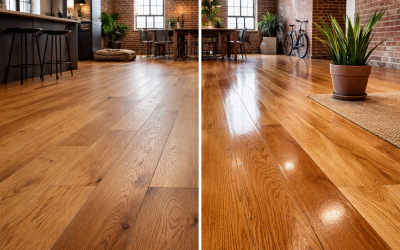
Once your timber floorboards have been sanded to perfection, the most critical decision remains: how to seal them. The choice between hardwax oil and water-based lacquer isn’t just about aesthetics; it’s about lifestyle and long-term maintenance. The problem for many UK homeowners is the conflicting advice found online. Agitation sets in when a floor is finished with a beautiful oil, only for the owner to realise they aren’t prepared for the periodic buffing required to maintain its lustre, or conversely, choosing a lacquer that can’t be easily repaired if a deep scratch occurs.
Our professional floor sanding services include a full consultation on finishes, ensuring your floor matches your home’s traffic levels and your maintenance preferences.
Osmo Hardwax Oil: The Natural Choice
Osmo Polyx-Oil is the gold standard for hardwax oils in the UK. It penetrates deep into the wood grain, providing protection from within while leaving a breathable, low-sheen finish that tends to highlight grain and texture beautifully. One of its greatest advantages is that it is ‘spot-repairable.’ If you have a small area of wear in a kitchen or hallway, you can clean and re-apply a small amount of oil without needing to sand the entire room. However, it requires a higher level of aftercare, including the use of specialist soaps like Osmo Wash and Care.
Pro-Tip: Curing Times and UK Humidity
In the often-damp UK climate, curing times for Osmo can be longer than stated on the tin. While it may be touch-dry in 8-10 hours, full chemical cure can take up to 10 days. We recommend keeping the room well-ventilated and avoiding the use of rugs or heavy furniture during this period. High humidity can lead to ‘grain raising,’ where the wood fibres swell; a light buff with a 120-grit screen between coats is essential for a smooth-as-glass finish.
Bona Lacquer: The High-Performance Shield
For those who want a ‘fit and forget’ solution, Bona Traffic HD is the ultimate choice. Unlike traditional varnishes that can look plastic-like, modern water-based lacquers come in ‘Extra Matt’ finishes that mimic the look of oil while providing a tough-as-nails shield. It is highly resistant to chemicals, scuffs, and scratches, making it ideal for busy family homes with pets and children. The downside? If the lacquer is breached, the only way to fix it is a full sand and reseal of the entire area.
Tannin Pull and Water Popping
When working with Oak, tradesmen must be wary of ‘tannin pull’—where the natural tannins in the wood react with the water in the finish, causing dark blotches. To combat this, we use high-quality primers like Bona Classic UX. Conversely, if we are applying a dark stain or oil, we may perform ‘water popping’ (lightly misting the floor with water) to open the grain and ensure the pigment penetrates deeply and evenly.
For more technical details on the machinery we use, see our guide on dust-free sanding technology. If you are restoring a period home, read our Victorian floor restoration guide. For commercial owners, our sports floor renovation post covers high-traffic requirements.